
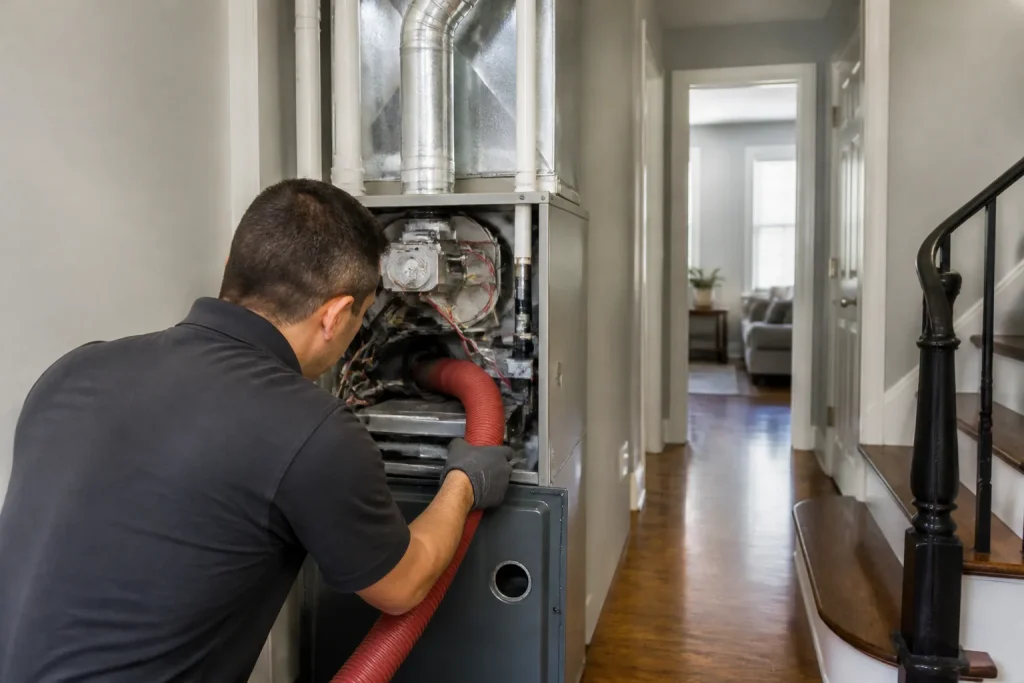
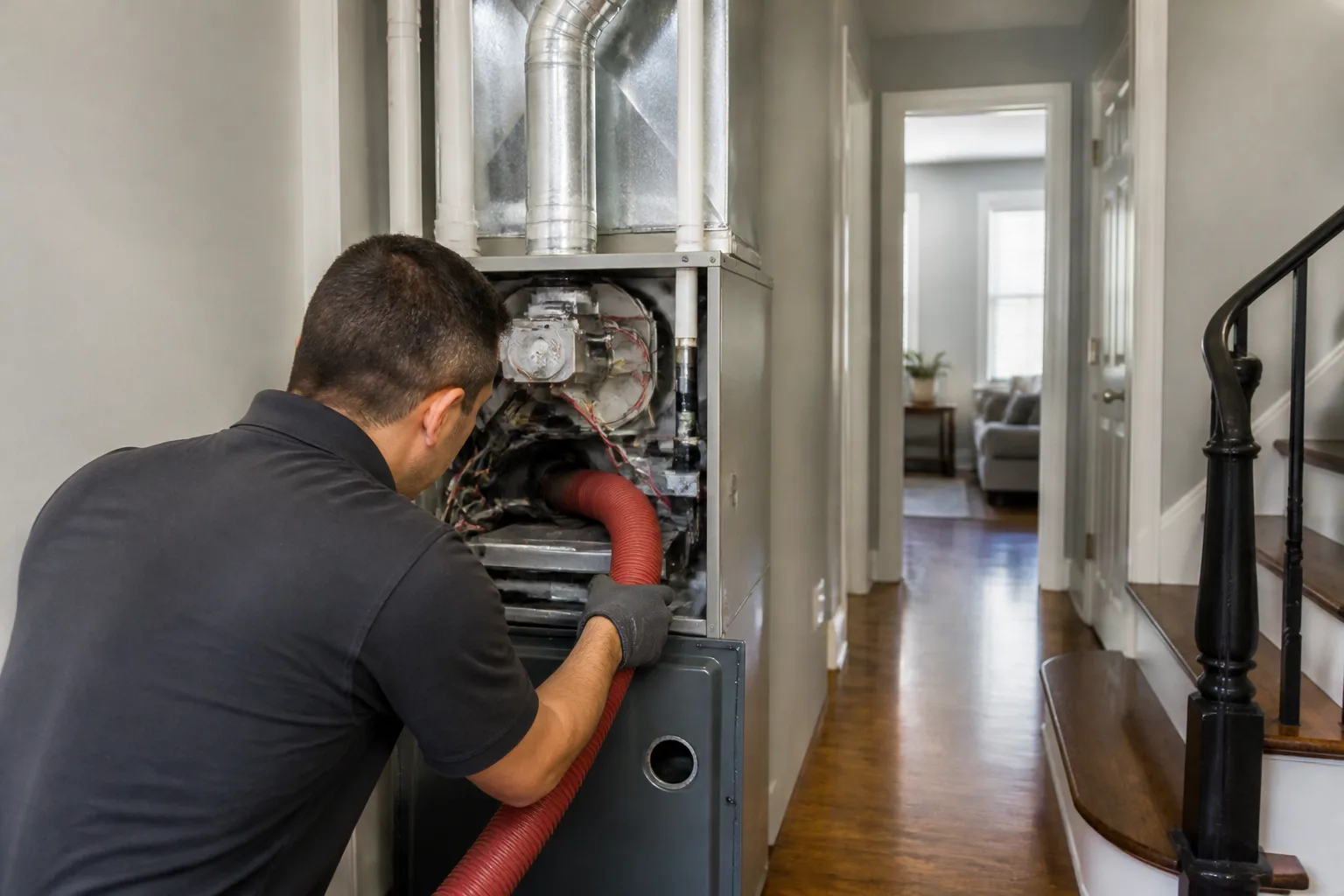
Honeywell HVAC Cleaning in Washington Heights: A Homeowner’s Guide
Honeywell zone controllers and damper actuators sit inside the duct path in many Washington Heights buildings. Run an aggressive rotary brush without knowing where those components are, and you’ve just created an expensive repair on top of a cleaning job. Honeywell-controlled systems here, especially in mid-rise and high-rise buildings, need a cleaning plan built around their zone architecture, not a single pass down a trunk line. This guide explains what that actually involves and what to ask before you book.
If reading this makes you want a second opinion instead of a DIY weekend, call (877) 792-7271.
Why Honeywell Systems in Washington Heights Need a Different Cleaning Approach
Most duct cleaning advice assumes one furnace, one blower, one straight run of duct. Washington Heights is full of buildings where that picture doesn’t hold. Many mid-rise and high-rise apartments run on fan coil units tied into a Honeywell zone control system, with motorized dampers opening and closing different branches depending on which zone calls for heat or cooling.
That changes the cleaning job in a fundamental way. The ductwork isn’t one continuous path. It’s a set of isolated segments, and each segment only gets proper negative pressure and brush contact when the system is configured to expose it. Clean the trunk and call it done, and the branches feeding individual rooms stay exactly as dirty as they were.
What zone-by-zone cleaning requires:
- Mapping which damper controls which branch before any equipment goes in
- Manually positioning or temporarily releasing each damper so the segment is open to the vacuum
- Cleaning and verifying each zone separately rather than treating the system as one run
- Re-checking damper travel after cleaning to confirm nothing was left stuck or misaligned
This is why a generalist crew with a shop-vac and good intentions can spend an afternoon in a Washington Heights apartment and leave most of the system untouched. The equipment matters, but the system knowledge matters more. Professional-grade equipment, residential pricing only works if the person running it understands what’s behind the grille.
Electronic Components: Why Automation Has to Come Offline First
Before a brush or air whip goes into a Honeywell-controlled duct system, the automation needs to be disabled. That’s the short answer, and skipping it is one of the more expensive mistakes we hear about.
Honeywell zone systems include damper actuators, sensors, and damper control boards mounted in or near the duct path. These are electromechanical parts. A rotary brush doesn’t distinguish between dust buildup and a plastic actuator housing. Neither does high-velocity air pushed through a segment that has a sensor sitting in it.
What happens when automation stays live during cleaning:
- An actuator drives a damper closed mid-cleaning, cutting off airflow to the segment being worked and stalling the vacuum
- A brush catches a damper blade that moved unexpectedly and bends the linkage
- Loosened debris gets driven into a control board or sensor housing instead of out to the collection unit
- The system cycles on and off unpredictably, which makes it impossible to confirm each zone was actually cleaned
The right sequence is: identify every electronic component in the duct path, power down and isolate the controls, clean mechanically zone by zone, then restore power and test each damper through its full range of travel. A technician who knows the layout does this as a matter of routine. One who doesn’t may not even look for the actuators before starting. That’s the difference between a cleaning and a repair bill, and it’s worth asking about directly when you book.
Fan Coil Units and Coils in Washington Heights High-Rises
In many Washington Heights high-rises, the equipment behind the Honeywell controls is a fan coil unit rather than a conventional furnace and air handler. That matters for cleaning because the coil and blower in a fan coil unit sit in a tighter cabinet with less clearance, and they collect a specific kind of buildup.
Fan coil coils run wet for much of the cooling season. Moisture plus dust plus time equals a matted layer on the coil fins that restricts airflow and pushes the blower to work harder. In a Washington Heights apartment with a Honeywell zone system, that reduced airflow can throw off how the zones balance against each other, so one room runs warm while another over-cools.
Cleaning considerations for fan coil units:
- The coil needs cleaning on the fin face and, where accessible, the drain pan below it
- The blower wheel collects dust on its blades, which cuts efficiency without any obvious symptom until airflow drops noticeably
- Cabinet interior surfaces should be cleaned and, where appropriate, treated with a product like Guardsman to leave a protected finish rather than bare metal
- Containment matters more in a tight cabinet, which is where Abatement Technologies filtration equipment earns its place on the job
Coil and blower cleaning is the part of a Honeywell HVAC cleaning in Washington Heights that most affects how the system actually performs afterward. Ducts can be spotless and the apartment still feels stuffy if the coil is matted. We clean the system, not just the visible parts.
How to Verify Your Building’s Control System Before You Book
The single most useful thing you can do before scheduling is find out what controls your system. Five minutes of checking saves a wasted visit or a technician arriving without the right access tools.
- Look at your thermostat. If it’s a Honeywell zoning thermostat with multiple zones listed, you have a zone system.
- Find the air handler or fan coil unit. Note whether the cabinet has a control board or damper actuators mounted on it.
- Check for access panels on the ductwork near the unit. Note whether they’re screwed shut, caulked, or fitted with latches.
- Ask your building superintendent whether the HVAC controls are per-unit or shared, and whether the building has a central control panel for the zone system.
- Note the filter size and type at the return grille, and whether the return is a single large grille or several smaller ones.
When you call, tell the technician: the thermostat brand and model if you can read it, whether you have a fan coil unit or a furnace, how many zones, and whether access panels are sealed. That gives them time to bring the right tools and plan the job around your specific layout. It also tells you something about them. A company that asks these questions back is one that has done this work in Washington Heights buildings before.
Filters, Returns, and How Often Cleaning Is Really Needed
Here’s the honest answer that most marketing skips: a Honeywell-controlled system with a well-sealed return and a properly sized filter changed on schedule does not need duct cleaning every year. The system tells you when it needs attention if you know what to look for.
Return-air configuration matters more than most homeowners realize. In Washington Heights apartments, a single large return grille pulls air from one central point, while several smaller returns spread the load. A leaky return in a closet or ceiling void pulls in dust from that space continuously, and no amount of duct cleaning fixes a return that’s drawing from a dirty cavity. That’s where duct repair and sealing comes in: seal the leaks first, then clean, or the cleaning won’t hold.
Signs the system actually needs cleaning:
- Visible dust buildup on the return grille and the duct behind it within weeks of cleaning it
- Musty or stale odor when the fan starts, especially in cooling season
- Uneven airflow between zones that wasn’t there before
- Allergy symptoms that worsen indoors during heating or cooling season
- A coil that looks matted when you shine a light into the cabinet
Filter choice matters too. A Honeywell or Aprilaire filter cabinet sized for the system, with a filter matched to its rating, protects the coil better than a stack of cheap filters that choke airflow. If you want whole-home filtration added, that’s a conversation worth having alongside the cleaning rather than after it.
When to Call a Pro (and What to Ask)
If you’ve checked the thermostat, found the fan coil unit, and seen matted dust on the coil or a return that pulls from a dirty cavity, that’s a pro job. Honeywell zone components and coil cleaning aren’t a DIY project, and the risk of damaging an actuator or a control board is real. Call a professional who knows zone systems, and ask three questions: do you disable the controls before cleaning, do you clean zone by zone, and can you show before-and-after photos of my own ducts. A company that answers all three without hesitation is one you can trust with the job.
Related services in Washington Heights: if the ducts are dirty and the returns are leaky, we handle Washington Heights air duct cleaning and HVAC cleaning through one company, along with duct repair & sealing to make sure the cleaning holds. Our technicians have up to 13 years of experience, and the local pros we connect you with are licensed and insured as their state requires.
The Bottom Line
Honeywell HVAC cleaning in Washington Heights is not a one-size-fits-all job. Zone dampers mean the system has to be cleaned segment by segment, electronic actuators and sensors have to be isolated before any brush goes in, and fan coil units need coil and blower attention that a standard duct cleaning skips. If you know your control system before you call, you’ll get a better job and a fairer estimate. Prices are set per job by written estimate, and we can work with your insurer where that applies.
If you’re in Washington Heights and need help, Air Duct Cleaning Washington Heights offers free estimates. Call (877) 792-7271. We answer 24/7. Fast dispatch from 7am to 7pm, Sunday through Friday.
Frequently Asked Questions
Cost depends on the number of zones, the type of equipment, and whether coil and blower cleaning is included. A zone-controlled fan coil system takes longer than a single-zone apartment, and that’s reflected in the estimate. We give a written estimate per job before work starts, and the price it sets is the final price. Call (877) 792-7271 for an exact quote; estimates are free.
Because damper actuators, sensors, and control boards sit in or near the duct path, and a moving damper or a brush striking it can bend linkages or drive debris into electronics. Disabling automation first lets the technician clean each zone fully, then test every damper through its full travel before restoring power. Systems cleaned with automation live often end up needing repair work on top of the cleaning.
Less often than most marketing suggests. With a properly sized filter changed on schedule and a sealed return, many systems go several years between cleanings. Watch for dust returning to the grille within weeks, musty odors at fan start, or uneven zone airflow. Those are the signals that matter more than an annual reminder.
Yes. Fan coil cleaning covers the coil face, the blower wheel, the drain pan, and the cabinet interior, with containment equipment to keep dust out of the apartment during the job. It’s the part of a Honeywell HVAC cleaning that most affects comfort, because a matted coil restricts airflow no matter how clean the ducts are.
Written by the team at Air Duct Cleaning Washington Heights.
Need Air Duct Cleaning Help?
Call Air Duct Cleaning Washington Heights - the local pro we connect you with is licensed and insured, here with fast help in Washington Heights.
(877) 792-7271