
Nikro HVAC Cleaning in Washington Heights: A Homeowner’s Guide
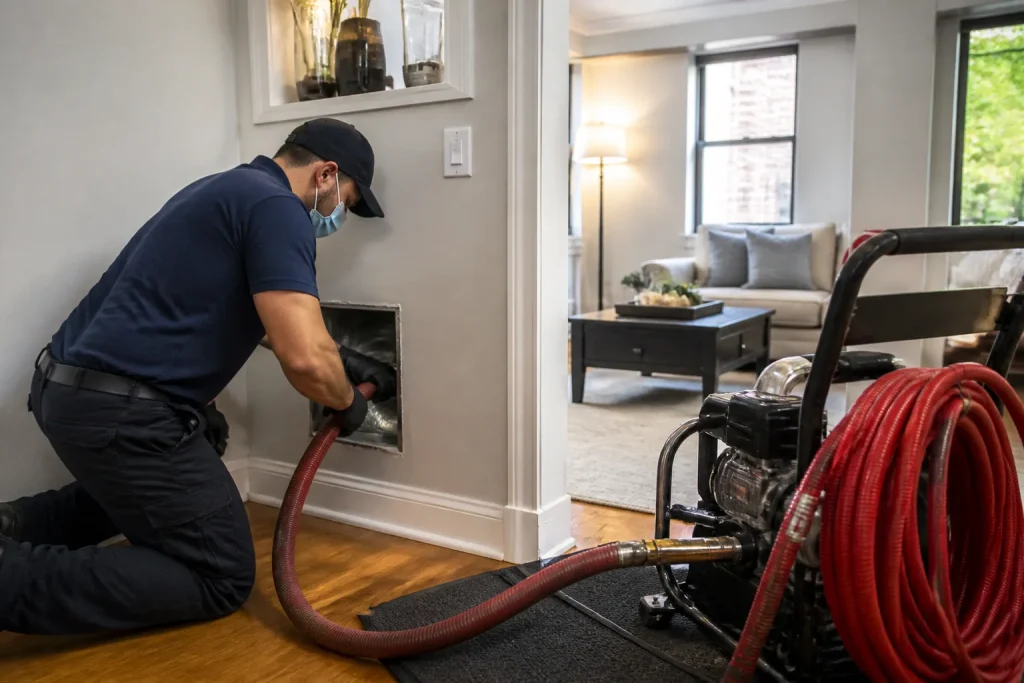
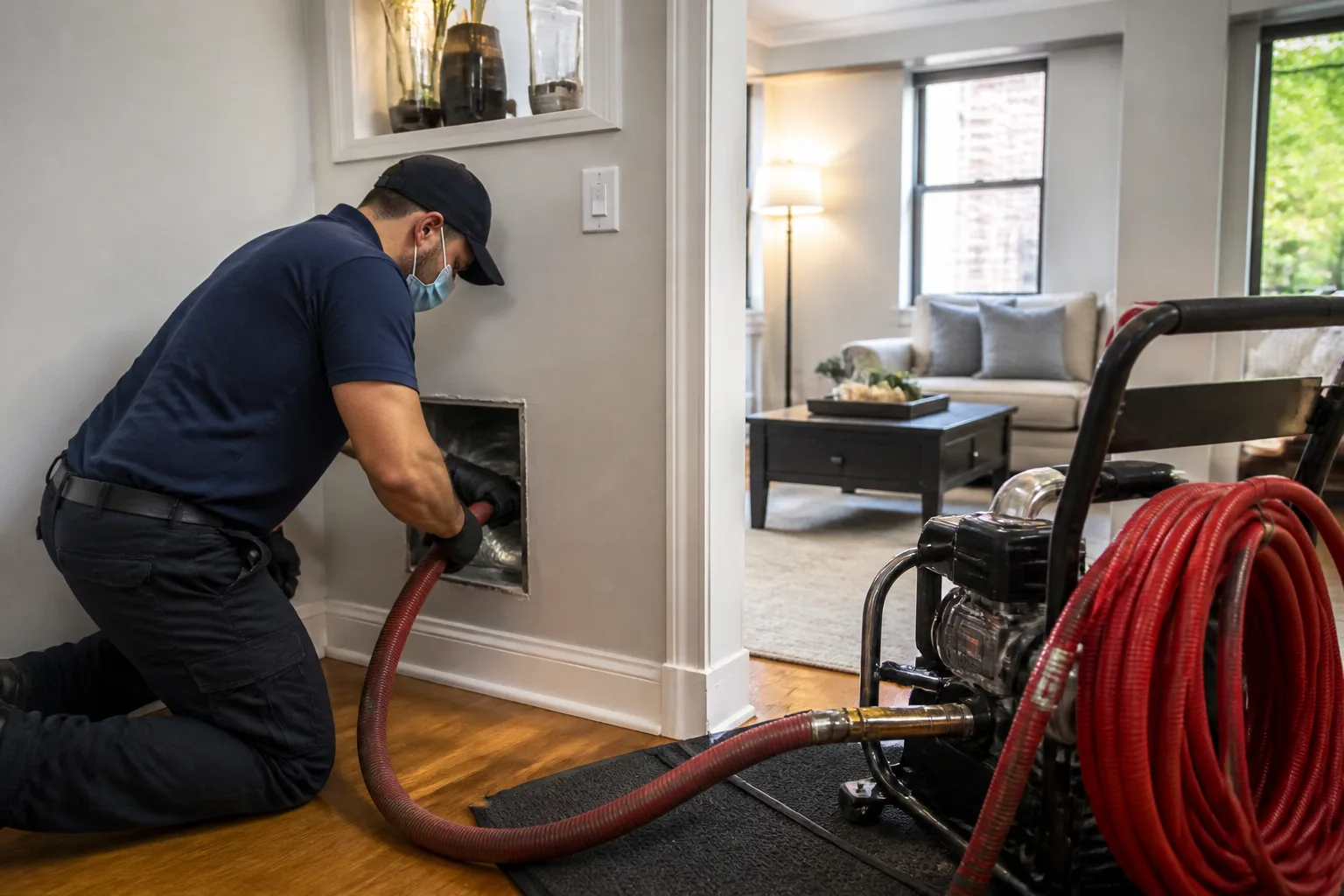
Most homeowners who hire an HVAC cleaner never see the equipment until it’s already in the hallway. By then the quote is signed and the technician is unrolling a hose. That’s the wrong moment to find out whether you hired someone with a shop-vac and a truck wrap or someone with real containment-grade machines. This guide explains what a Nikro system actually does inside a Washington Heights apartment, why the equipment matters, and how to confirm you’re getting it before anyone steps through the door.
If you’d rather not sort through the equipment question yourself, call (877) 792-7271. We answer 24/7, and estimates are free.
What does a Nikro negative air machine actually do inside a duct system?
It creates a sealed vacuum on the whole duct network so debris has one direction to travel: out. A Nikro negative air machine pulls the duct system into negative pressure, which means every open register, seam and return draws air inward instead of leaking dust back into your rooms. The collected air passes through HEPA filtration before it’s exhausted, so fine particulate, the stuff that triggers dust buildup and allergy symptoms, gets trapped rather than redistributed.
That architecture is why these machines are used in industrial indoor air quality work: asbestos abatement, fire restoration, biohazard cleanup. When it’s applied to a Washington Heights apartment, the practical result is containment. Loose dust doesn’t settle on your furniture while the technician works, and it doesn’t travel to the neighbor through a shared wall cavity.
Rotobrush handles the agitation side of a job, the brushes and air whips that knock stuck debris off duct walls. Nikro handles the pressure and filtration side. On a real cleaning, both matter: agitation without containment just moves the problem around the apartment.
For anyone with respiratory concerns, that order of operations is the whole point. Debris gets loosened, captured, filtered and removed, not simply dislodged.
How does professional equipment handle Washington Heights pre-war buildings?
Carefully, and with a lot more attention than newer construction demands. Washington Heights has a deep stock of pre-war apartment buildings with irregular duct geometry: short runs, tight closet chases, offset returns, and whatever material was on hand when the building was converted. There is no clean diagram to follow.
Standard contractor equipment is built for the geometry of newer homes, long straight trunks with accessible plenums. A Nikro system’s higher negative pressure reaches into short runs and sharp turns where a weaker machine just can’t sustain pull. The technician adjusts register by register rather than opening every vent full-blast, which matters in a building where you and your neighbors share wall cavities.
A few things we check on entry in a Washington Heights apartment:
- Register and return placement, and whether any have been covered or altered over the years
- Visible materials at the duct openings, since older buildings sometimes use materials that call for a gentler approach
- Whether the run is connected to a shared cavity or dedicated to your unit
- The condition of seams and joints, since a loose seam under pressure can drop debris back into the apartment
When the ductwork is failing, cleaning alone can’t fix it. That’s where duct repair & sealing comes in: seal the leaks first, and the cleaning actually lasts. If seams are compromised, cleaning a system that leaks just re-contaminates it.
What does a Nikro-based cleaning job look like from setup to completion?
Boring, to a good observer. Legitimate professional work is set up, methodical and quiet. Here’s the sequence we run in Washington Heights, and the one you should expect from any contractor claiming professional-grade equipment.
- Setup and floor protection. Drop cloths down, registers opened, machine staged at the point where it can hold pressure across the whole system.
- Containment. Negative pressure is established before the first register is agitated, so nothing airborne escapes into the living space.
- Agitation, run by run. Each branch is worked with a brush or air whip while the vacuum holds. Returns and supply lines get separate passes.
- HEPA filtration throughout. Air leaving the machine is filtered, not exhausted raw.
- Sanitizing, if you requested it. Applied after the ducts are clean, not before, since sanitizer on a dirty surface doesn’t reach the walls.
- Before-and-after documentation. We photograph the duct interior at set points before and after, so the homeowner can see what changed.
The whole process for a typical Washington Heights apartment takes most of a working day. If someone promises to clean a full apartment system in an hour, ask what equipment they brought. The answer usually explains a lot.
Nikro vs Rotobrush: which is the right tool, and why carry both?
They solve different problems, which is why a full-service contractor carries both. The Nikro is your pressure and filtration machine: it holds the system under negative air, filters what comes out, and applies the force needed to move debris through an entire network. Rotobrush is the contact tool: motorized brush heads and whips that physically scrub the inside of the duct wall.
Neither replaces the other. A Rotobrush run into a system with no containment loses effectiveness quickly. A Nikro machine with no agitation removes what’s loose and leaves what’s stuck. On a full job both are running at the same time: the Rotobrush breaks debris free, and the Nikro captures it before it can drift.
There’s a case for adding an HVAC cleaning pass to the visit. Your coils, blower and drain pan are part of the same air path, and cleaning ductwork while the air handler is grimy means the system blows that grime right back into clean ducts.
And it isn’t only ducts. Dryer vents are a separate fire hazard that many duct cleaners treat as an afterthought. We run those as a standalone service, not a checkbox tacked onto the end of a duct job.
How do you confirm a contractor actually uses professional-grade equipment?
Ask to see it on the estimate, and ask what brand. A contractor using Nikro, Rotobrush, or Abatement Technologies equipment can answer without checking. Someone using a converted shop-vac usually can’t.
Here’s what to ask before you hire, in Washington Heights or anywhere else:
- What machine will be on site, and what brand? “Professional equipment” as a phrase tells you nothing. The brand name does.
- Does it filter the exhaust, and to what standard? HEPA filtration, or nothing, is the axis that matters.
- Are before-and-after photos included? A photo of your ducts is verification. A photo of a clean truck is marketing.
- Do you price per system or per vent? Per-vent pricing at a low headline number is the shape of a bait-and-switch. We quote one flat price per system, agreed before work starts.
- Do you offer duct repair and sealing? If not, any cleaning is temporary where the ductwork leaks.
- Who is asking me to sign, and what does the written estimate say it covers? A written estimate before the work begins, with no surprise line items later.
Our technicians have up to 13 years of experience, and we’ve seen the difference equipment makes on jobs where the customer’s only yardstick was the price on the invoice. Ask the questions above, listen for the answers, and the shortlist gets short fast. We also work alongside product lines like Honeywell and Aprilaire for filtration and air quality components, so we’re usually the ones running the questions on a system we didn’t install.
If you want the full picture of what a professional air duct cleaning service involves in Washington Heights, start with air duct cleaning and read through the process before you get quotes.
When to call a pro
Not every dust problem needs the full equipment stack. But some signs mean the system is beyond what a homeowner should tackle:
- Dust collects on surfaces within days of cleaning
- A musty or stale smell follows the air when the heat or AC kicks on
- Allergy symptoms ease when you’re outside the apartment and return when you’re in it
- Airflow is uneven room to room, especially in a pre-war layout
- Visible debris at registers, or a furnace filter that clogs within weeks
We answer 24/7. Fast dispatch from 7am to 7pm, Sunday through Friday. If your call is outside dispatch hours, it’s booked into the next opening.
Related services in Washington Heights: HVAC cleaning, duct repair & sealing, and air duct cleaning in Washington Heights.
The Bottom Line
Nikro equipment exists because residential air systems need pressure and filtration, not just a vacuum hose. The difference between it and a shop-vac is real, it’s measurable, and it’s the reason a professional cleaning holds up longer than a quick pass. In an older Washington Heights building, with its short runs and shared cavities, that difference shows up on the first visit.
If you’re in Washington Heights and need help, Air Duct Cleaning Washington Heights offers free estimates. Call (877) 792-7271. We answer 24/7. Fast dispatch from 7am to 7pm, Sunday through Friday. One flat price per system, agreed before work starts, with before-and-after photos of your own ducts so you can see for yourself.
Frequently Asked Questions
Yes. A shop-vac has no way to hold a whole duct system under consistent negative pressure, and its filter doesn’t capture fine particulate to the same degree. A Nikro negative air machine pulls the entire network under vacuum, filters the exhaust through HEPA media, and sustains that pressure against the resistance of a long run. Call (877) 792-7271 for a free estimate.
On a full residential cleaning, yes. The Rotobrush scrubs the duct wall while the Nikro holds containment. They cover different parts of the job. Confirm which machines will be on site when you book, and you’ll know exactly what the visit involves.
There’s no single number that fits every apartment. A system with pets, allergy symptoms, recent renovation or heavy street-facing dust typically needs attention sooner than a lightly used one. Visual checks and filter change frequency are a better guide than a calendar. Call (877) 792-7271 for a free assessment.
Before-and-after photos of your own duct interior, taken at set points during the visit. That’s how you verify it. Ask for the photos before the job starts so nobody has to scramble to produce them afterward.
Yes. Sealing the leaks first is what makes the cleaning last; otherwise the system just re-contaminates through the same seams. Duct repair and sealing is part of the service, not a separate referral.
Written by the team at Air Duct Cleaning Washington Heights.
Need Air Duct Cleaning Help?
Call Air Duct Cleaning Washington Heights - the local pro we connect you with is licensed and insured, here with fast help in Washington Heights.
(877) 792-7271