
Last updated November 22, 2026
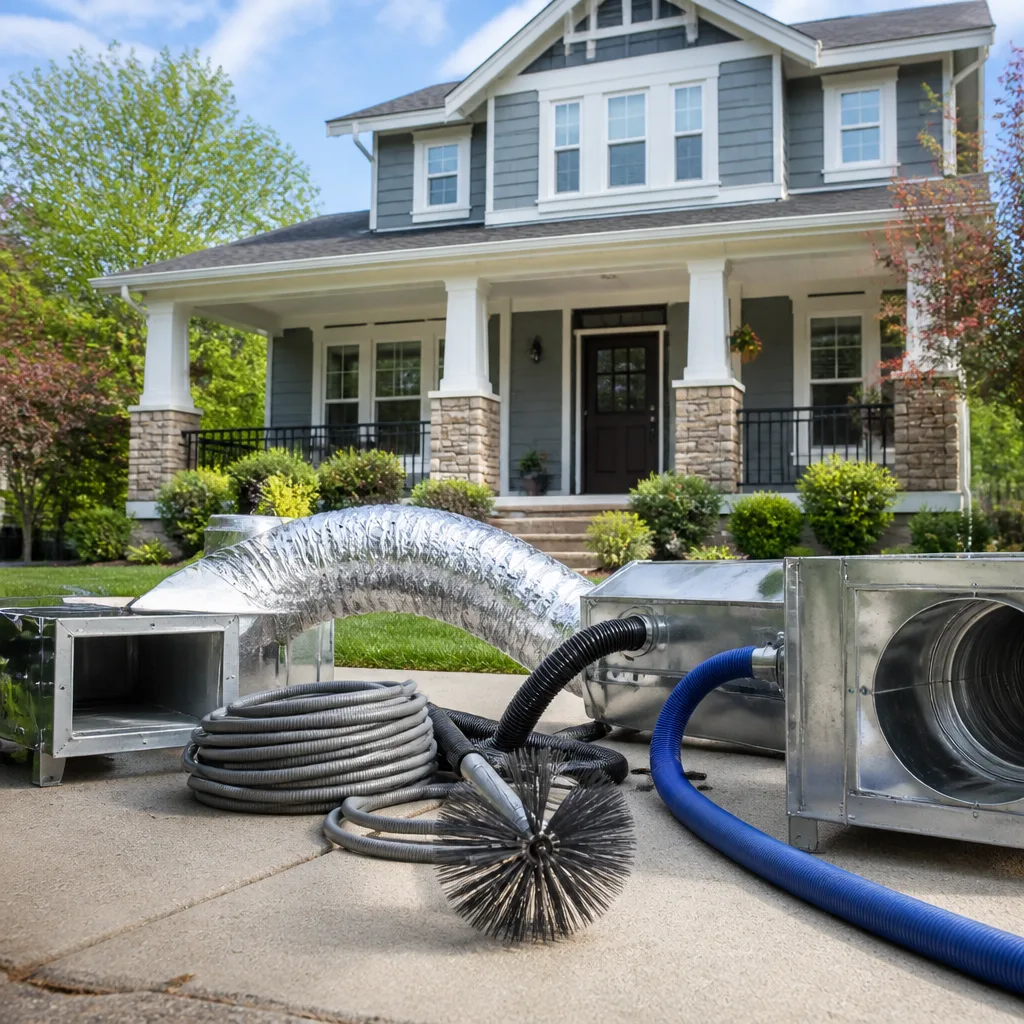 Whole-home duct cleaning
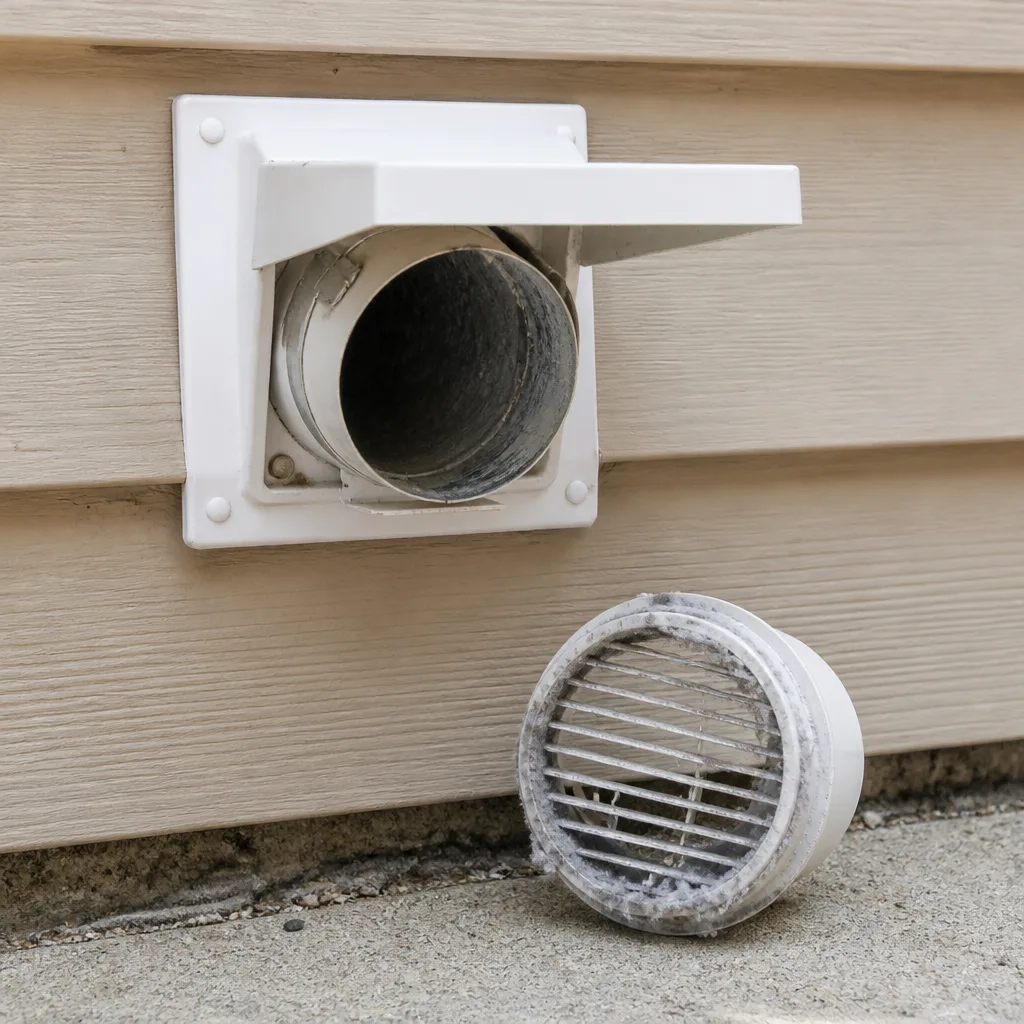 Dryer vent cleaning
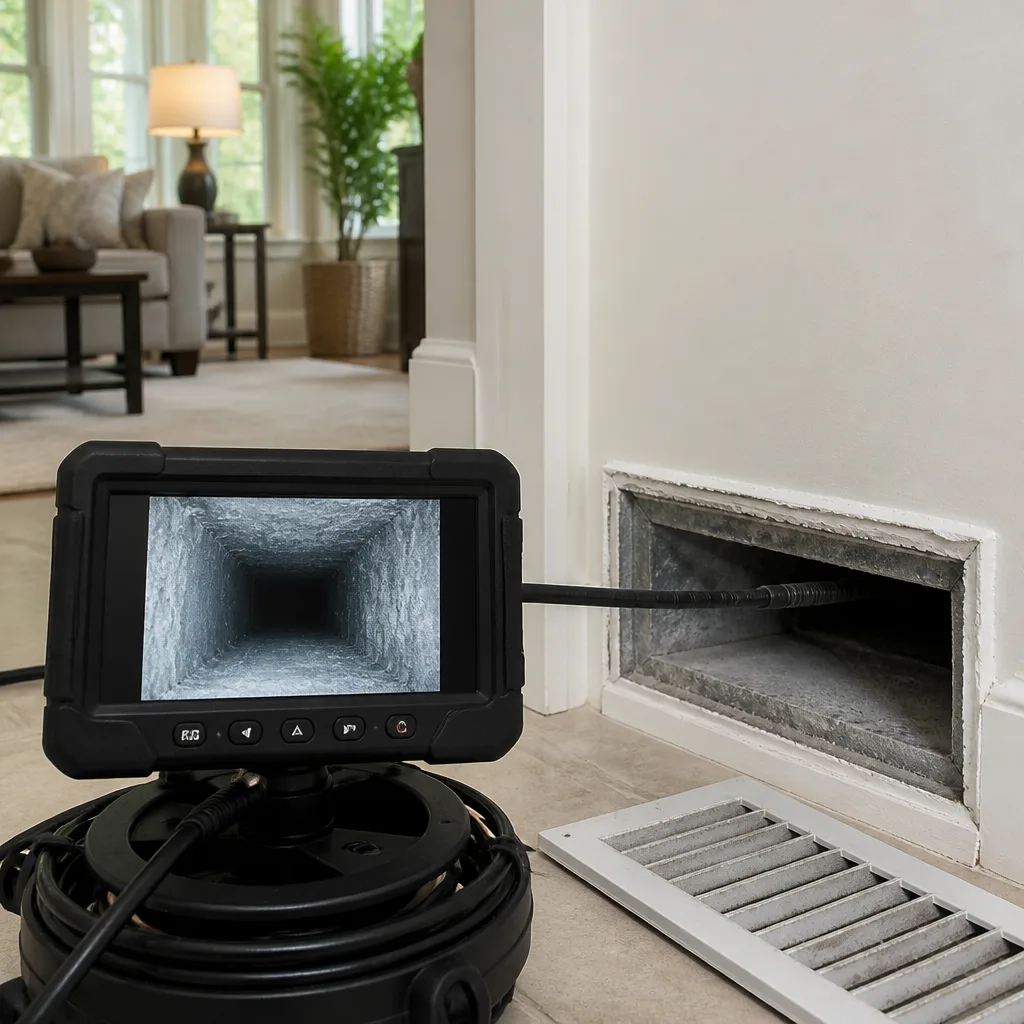 Camera inspection
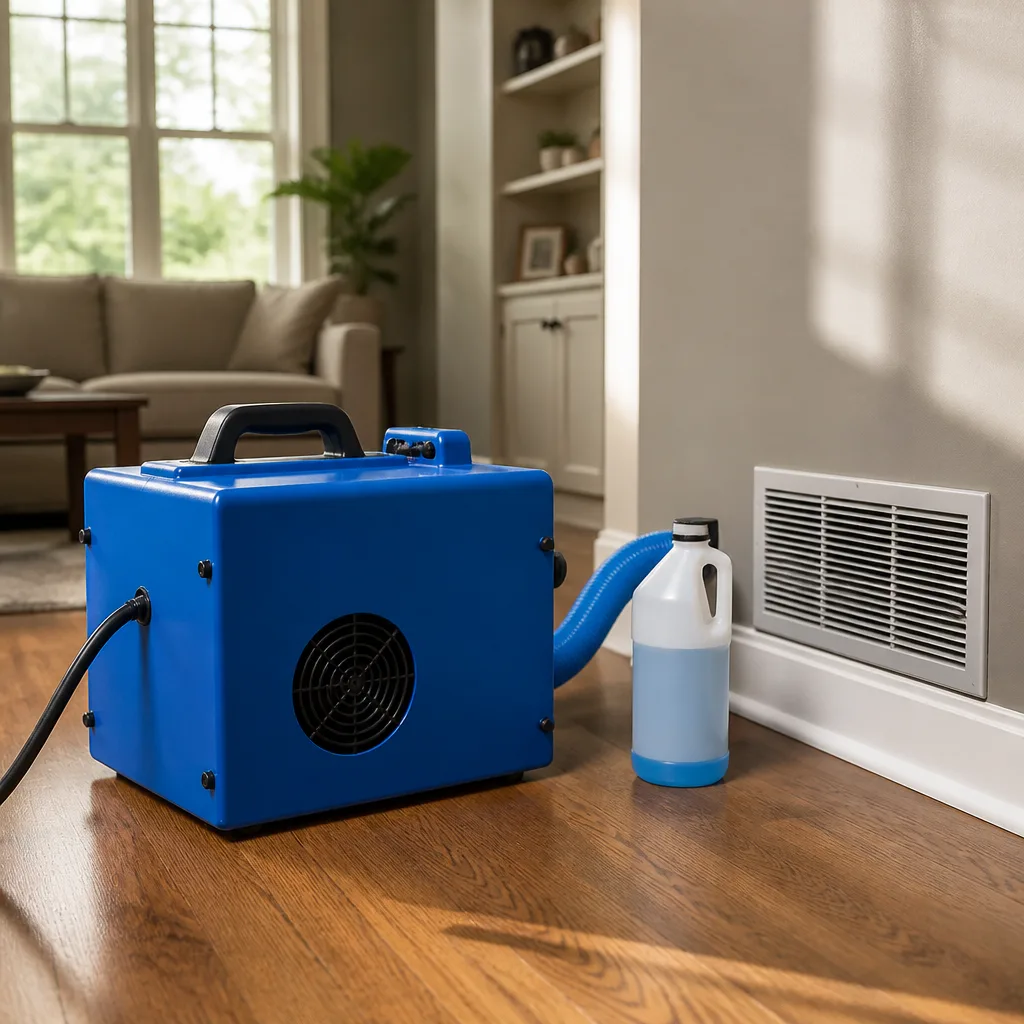 Sanitizing & deodorizing
Whole-system duct and dryer vent check with before-and-after photos - you see exactly what came out of your vents
That "$99 whole-house special" is a bait ad - the real number appears once they are in your hallway, or the "clean" is a shop-vac at the register. We photograph the inside of your ducts before and after instead.
Air Duct Cleaning Warning Signs: A Washington Heights Homeowner’s Reference Guide
Visible dust on a supply vent register is one of the least reliable indicators of dirty ductwork. In most cases it means your filter is doing its job – capturing debris at the intake before it ever reaches the supply run – or that the register itself hasn’t been wiped down in a while. The signs that actually matter don’t appear on the usual “when to clean your ducts” list. They show up as uneven room temperatures in a pre-war two-bedroom on Cabrini Boulevard, as musty smells that intensify when the heat comes on in November, as allergy symptoms that get worse in January rather than April. This guide treats warning signs as diagnostic indicators: what each symptom actually tells you about the condition of the system inside your walls, and what to do about it.
Quick Answer
The warning signs that genuinely point to duct contamination in a Washington Heights apartment or house are: visible debris blowing out of a supply register when the system starts, a musty or earthy odor from return grilles, allergy symptoms that peak in heating season instead of spring, uneven room temperatures in rooms that share the same system, and filter media that loads with a specific type of debris faster than expected. Dust on the outside of the vent cover, by itself, is not one of them. What matters is the pattern across multiple signs, not any single observation.
Styles & brands we work with
- Whole-home duct cleaning
- Dryer vent cleaning
- Camera inspection
- Sanitizing & deodorizing
Table of Contents
- Why Dust on the Register Is Not the Sign You Think It Is
- What Uneven Room Temperatures Actually Indicate
- Musty Odors vs. Dust Odors: Why the Distinction Matters
- Reading Your HVAC Filter as a Diagnostic Tool
- Why Allergy Symptoms Spike in Winter, Not Spring
- What You Can Check Without Tools in a Washington Heights Apartment
- When the Signs Together Point to Professional Attention
- Frequently Asked Questions
Why Dust on the Register Is Not the Sign You Think It Is
When a homeowner in Washington Heights calls us worried about a dusty supply grille, they’re usually describing the normal outward face of a filter doing its job. Airborne dust settles on surfaces. Unless your register is actively blowing visible puffs of debris when the blower kicks on, a light film on the louvers tells you about room dust, not duct condition. The same goes for a thin layer on the return grille in a hallway – a return is designed to pull in room air, and small particles will cling to the frame.
What does signal a problem is when the register itself becomes a source rather than a surface. Specifics you can watch for without opening anything:
- Puffs or visible particles when the system starts. A brief visible exhalation from the supply on startup means debris has settled on surfaces inside the duct and is getting lifted when the airflow begins. This is a real indicator.
- Discoloration radiating from the vent edges. A dark halo around the perimeter of a supply grille can point to moisture tracking along the dust, not just settled dust. That’s a humidity or condensation issue inside the run, not a cleanliness issue.
- Debris stuck to the inside of the register collar. If you can reach a supply register safely and see matted material on the inside of the boot, that’s worth noting. Don’t remove the boot to check – call a professional instead.
- New debris appearing after a renovation. Plaster work, sanding, or a kitchen gut-do in a nearby unit can push renovation dust into shared air paths in a pre-war co-op. If your neighbors are renovating, expect dust.
The habits that matter more than what you see on the register face are what you can observe from the grille distance. If you’d describe the question as “is this blowing dust at me?” the answer is worth investigating. If you’d describe it as “the cover looks gray,” it probably isn’t. For an overview of what a professional job actually involves, our air duct cleaning specialists walk through it step by step, from initial inspection to a before-and-after capture of what the system surfaces looked like walking in.
The pre-war complication
Most Washington Heights residential stock was built between 1900 and 1940, and original ductwork or retrofitted runs are often shorter, more irregular, and located inside chase walls than modern suburban systems. That means debris accumulates faster in the first few feet of the run and rarely makes it to the register itself. In practice, this makes wall-register dust even less reliable as an indicator in this neighborhood, and makes the inspection points further back in the system more important. Return air grilles in converted apartments – often where a studio was split into a one-bedroom by the previous owner – should also be mapped out, because the return path may run much closer to a kitchen or bathroom than in a modern layout.
What Uneven Room Temperatures Actually Indicate
Uneven room temperatures are the most-misdiagnosed signal on the list. When one bedroom in a Washington Heights co-op runs five or six degrees cooler than the living room, homeowners often assume “dirty ducts.” Sometimes it is, but just as often it is duct leakage, insulation failure, or a system that was sized for a different layout than the one it’s serving. The symptom is real; the question is which of three causes is behind it.
Cause 1: duct blockage or debris buildup
When a run has accumulated enough material inside it, airflow narrows. The room gets less conditioned air, and the room that’s nearest the air handler gets more. The tell here is often that the cool room has a supply register with noticeably weaker airflow than the others when you hold a tissue near it. If the imbalance is seasonal – the same room is cold in winter and hot in summer – a partial blockage or a collapsed flex duct inside a chase is a plausible cause.
Cause 2: duct leakage or sealing failure
Leaky joints in older ductwork lose a meaningful share of conditioned air to the wall cavity before it reaches the register. That cool room you can’t get comfortable is often the one furthest from the air handler, and the leak is upstream of it. This is why duct repair & sealing is often the fix once a professional has confirmed the loss. Cleaning a leaky system without sealing the leaks just means clean air escapes into the wall instead of dirty air. The symptom doesn’t resolve on cleaning alone.
Cause 3: system sizing or return-air insufficiency
Some temperature imbalances are not a duct problem in the sense of cleanliness at all. A pre-war layout with a single central return in a hallway often can’t move enough air through bedrooms that have only a supply. A system originally sized for a different square footage – common in Washington Heights apartments where a unit was combined from two smaller ones – will never balance without adding return capacity. No amount of duct cleaning fixes this, and an honest inspection should tell you so before you spend money.
What a professional inspection separates
- Measure airflow at each visible supply register to identify the weak run.
- Trace the run and note joint condition, visual obstructions, and any collapsed flex or crushed sections.
- Confirm whether the air handler itself – blower wheel, evaporator coil – is clean enough to move air properly.
- Confirm return path capacity and identify any undersized or blocked return.
That sequence is the difference between “your ducts are dirty” and “here is the specific reason this room isn’t comfortable.” It’s also the reason HVAC cleaning often goes hand in hand with duct work in older buildings: a dirty blower wheel and evaporator coil reduce airflow just as effectively as a blocked duct, and cleaning one without the other leaves half the problem in place.
Musty Odors vs. Dust Odors: Why the Distinction Matters
All duct smells are not the same, and the type of odor tells you what kind of intervention is needed. Dust odor is a dry, faintly stale smell, the kind you notice when you turn on the heat for the first time in the fall after months of disuse. It comes from settled particles warming up. It’s unpleasant, sometimes persistent, and usually resolved by cleaning the system. Musty odor is different, and it should change how you respond.
What musty odor signals
A musty, earthy, or damp-basement smell points to moisture somewhere the air is traveling. That could be condensation on the evaporator coil, standing water in a drain pan, a leak in a wall or roof affecting the return path, or a humid summer producing enough ambient moisture inside a poorly ventilated run for biological growth to establish. In a Washington Heights pre-war apartment, a common version of this problem is a return chase that runs against an exterior wall or under a bathroom, where ordinary condensation from temperature differential can accumulate over years.
Here’s the reason the distinction matters: cleaning a duct system that has a moisture source is temporary. The growth returns, sometimes within a season. The sequence needs to be:
- Find the moisture source. Coil condition, drain pan level, any wall or ceiling staining near a return, ambient humidity inside the apartment.
- Fix the moisture source. This may be HVAC-side (coil cleaning, drain clearing) or building-side (a leak needing your super or managing agent).
- Clean the system. Remove debris and any biological material that was able to establish.
- Sanitize and consider containment-grade filtration. This is where a professional-grade setup matters. Our work uses Abatement Technologies filtration equipment precisely because it captures fine particles at the source rather than redistributing them – and we use Honeywell and Aprilaire filtration products so the cleaned system stays cleaner afterward.
What dust odor signals
A faint dusty smell that appears mainly at startup, in the first weeks of heating season, and fades with a wipedown of returns is almost always settled-particle odor. It’s the smell of the system waking up. If it persists for weeks, or comes back within days of running continuously, that’s a sign the particles keep getting resuspended – which points to buildup inside the duct, not just on the exterior surfaces.
What neither smell signals
A sharp chemical or “hot plastic” smell is not a dirty-duct problem. Turn off the system and call for HVAC service. An exhaust or gasoline smell warrants immediate attention and inspection by building management. Duct cleaning is not the answer to either of those.
Reading Your HVAC Filter as a Diagnostic Tool
Your filter is the cheapest diagnostic tool in your apartment, and most people ignore its information content. The key is not “is it dirty?” – every filter gets dirty. The key is what kind of debris is loading it, and how fast. A filter that loads evenly with light gray dust after its normal life is a filter doing its job. A filter that loads in an unusual pattern or with an unusual material is telling you something about the system upstream of it.
Debris types and what they mean
- Even, light-gray loading: normal household dust. Filter media working as designed. No duct intervention indicated.
- Matted, felted, lint-heavy loading: textile fibers dominating the debris load. Common in units with in-apartment dryers vented poorly, or in apartments near a shared laundry. Worth checking whether the dryer vent is functioning – a topic we cover under dryer vent cleaning. Dust this fibrous inside a duct also builds up faster and is harder to remove with anything less than a purpose-built rotary brush system like Rotobrush.
- Dark staining, especially with any musty smell: possible moisture involvement. Do not dismiss this pattern. Have the system inspected before cleaning.
- Construction grit, plaster dust, or fine white powder: renovation dust. Very common after a neighboring gut renovation in a pre-war building. If your filter is loading with plaster dust within days, that’s renovation debris entering your return. Cleaning is warranted once the renovation is finished; sealing gaps in the return path may also be needed.
- Rapid loading – the filter clogs months earlier than usual: increased particulate entering the return. Could be building work, could be a duct problem upstream. Worth a look.
- Almost no loading at all, ever: possibly fine – could also indicate the filter is bypassing its housing rather than air passing through it. If the filter is clean and the returns are dusty, air is going around the filter, not through it. This is common in older filter frames.
How to read the filter safely
Check your filter by sliding it out and holding it toward a light. Look at the loading pattern before you replace it. Note the type of debris, not just the amount. Replacing a filter tells you nothing once it’s in the trash. If you keep a note of what each filter looked like, you give a professional inspector real diagnostic data when they arrive.
Use a filter with the rating your system is designed for, and check it at the interval your HVAC manual specifies. Installing a higher-rated filter than your system is designed to move air through can itself cause airflow problems, especially in older systems in Washington Heights buildings. A professional-grade filtration product such as Aprilaire works best when the system is designed to accommodate it.
Why Allergy Symptoms Spike in Winter, Not Spring
Spring allergies get all the attention, but a specific pattern – congestion, sneezing, or watery eyes that ramp up in December and January and fade in April – points somewhere other than outdoor allergens. In Washington Heights, where most homes run radiators or heat pumps continuously through the coldest months and windows stay shut, indoor air quality becomes the dominant variable. If your symptoms are worse inside than outside, and worse in heating season than in pollen season, the question to ask is: what’s in the air my system is moving?
What winter symptom spikes actually suggest
- Contaminant concentration. Windows closed, no outdoor air exchange, system running continuously. Whatever is inside your ductwork gets recirculated more often. Even a modest amount of debris becomes a bigger exposure in January than it was in October.
- Dust mite activity in dry heat. Radiator heat and dry indoor air can drive up dust particulates and dry out nasal passages, making people more reactive to whatever particulates exist. A well-cleaned and properly filtered system helps but doesn’t fix winter air dryness on its own.
- Return-path contamination. Debris in the return path is often what reaches the occupied rooms first, and returns in pre-war apartments can run through or near kitchens, bathrooms, or shared building shafts. In our experience across Washington Heights buildings, a return that passes through a corridor and collects hallway debris is often the biggest single contributor to winter symptom complaints.
- Filter bypass. As above – if air is going around the filter, the filter’s rating doesn’t matter. Worth checking.
What winter symptom spikes don’t tell you
They don’t confirm mold, and they don’t confirm that a duct cleaning will resolve them. An honest inspection first asks whether the return path, coil, and blower are clean, then whether there’s a moisture source, then whether filtration is adequate. Only after those are ruled out does duct cleaning become the primary intervention. We’d rather lose the job than sell a cleaning that can’t help.
When cleaning is the answer, sanitizing afterward often follows – not as an upsell, but because a freshly cleaned system without any sanitizing leaves biological material that survived the cleaning to re-establish. Guardsman products we use give a finish-and-protect standard inside the system, so the clean holds.
What You Can Check Without Tools in a Washington Heights Apartment
You don’t need a moisture meter or a thermal camera to notice the signs worth calling about. This is the checklist we’d give a homeowner who wants to do a walkthrough before deciding whether to schedule an inspection. All of it is surface-level and safe – do not remove registers, disconnect any duct, or reach into a wall.
- Walk each supply register. Hold your hand about two inches from the grille at the start of a heating or cooling cycle. Does the airflow feel roughly the same at each supply? Is any register noticeably weaker?
- Look at the register face, not the room. Debris on the louvers themselves is a weak signal. Debris inside the register collar – the metal or wood surround just behind the face – is a stronger one.
- Check return air grilles, especially in converted apartments. A return in a hallway, near a bathroom, or in a room divided by the previous owner is a high-value inspection point. Any staining, matting, or debris visible on the inside of the return grille is worth noting in detail.
- Run the system and smell it. Start the fan after a few hours off. Note what you smell in the first 30 seconds. Dusty odor can be normal. Musty odor is not.
- Walk the ceiling and walls near returns. Any water staining, discoloration, or efflorescence on a wall that shares a path with a return is relevant to a moisture question.
- Note which rooms are uncomfortable and when. Room-by-room, season-by-season. That pattern is the single most useful piece of information you can hand an inspector.
- Photograph what you find. Cell phone photos of a stained return or matted debris can save time and make the conversation easier.
That’s it. Everything else – the coil, the blower, the flex runs in a chase, the interior surfaces of a duct – requires equipment and a trained eye to inspect safely. Gas appliances, electrical panels, and any component that would require disassembly are outside the scope of what a homeowner should inspect, and we always recommend a trained professional for anything behind a panel or inside a mechanical closet.
When the Signs Together Point to Professional Attention
Any one of the signs above is possible noise. A pattern is a signal. If you have two or more of the following in a Washington Heights apartment or house, it’s worth scheduling an inspection: a persistently musty odor from a return, uneven room temperatures that haven’t responded to filter changes or thermostat adjustment, winter allergy symptoms that fade in spring, filter loading that has changed in character or pace, or a return grille with visible staining or matting. Add a recent neighboring renovation, a combined-apartment layout, or any past water event near a return and the case for inspection gets stronger.
An inspection that identifies a moisture source or a return-path problem is worth more than three cleanings that don’t. A professional-grade setup matters here: purpose-built equipment like Rotobrush and Nikro systems are engineered to agitate and extract debris from the interior surfaces of a duct without damaging the duct itself, and Abatement Technologies filtration captures what the cleaning lifts. The difference between that and a shop-vac approach is visible in the before-and-after documentation a proper job should give you.
Air Duct Cleaning Washington Heights offers free estimates in Washington Heights. Call (877) 792-7271. We answer 24/7. Fast dispatch from 7am to 7pm, Sunday through Friday.
See the difference
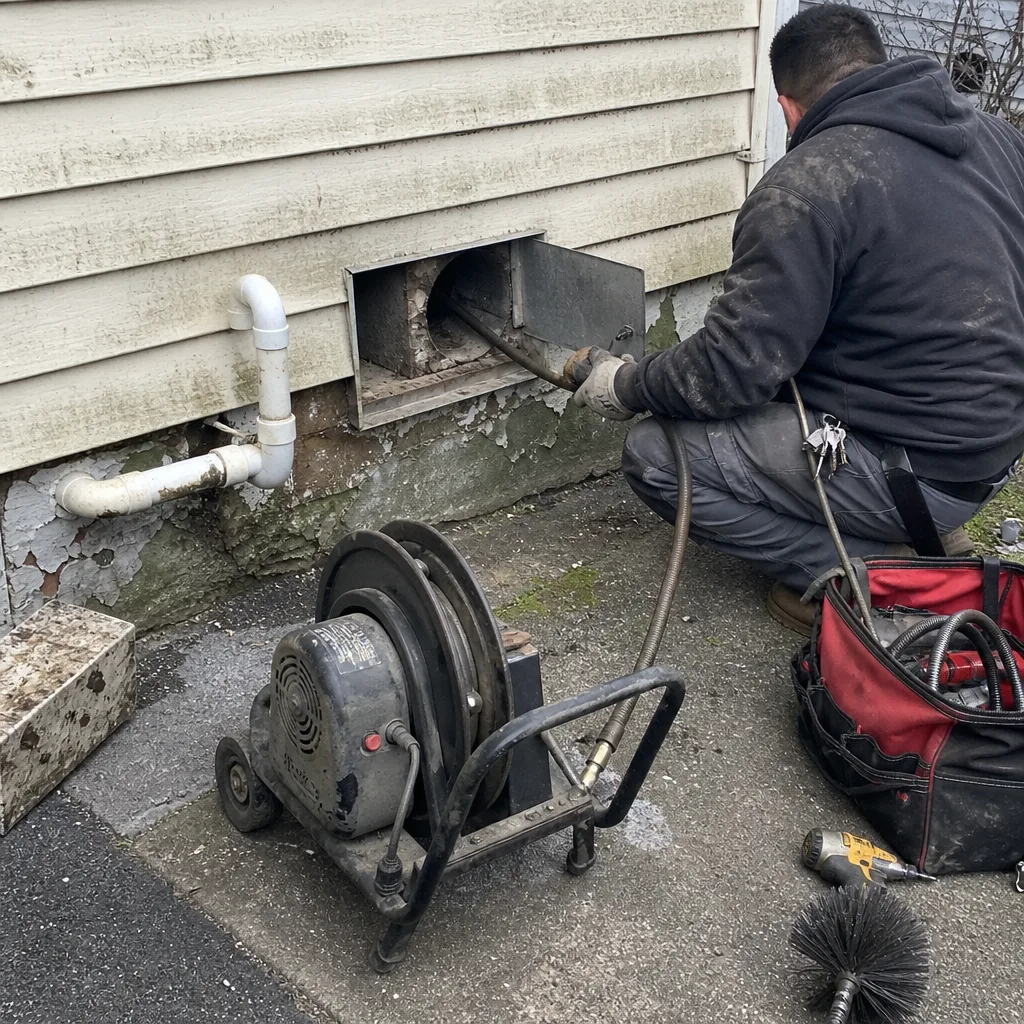 Before
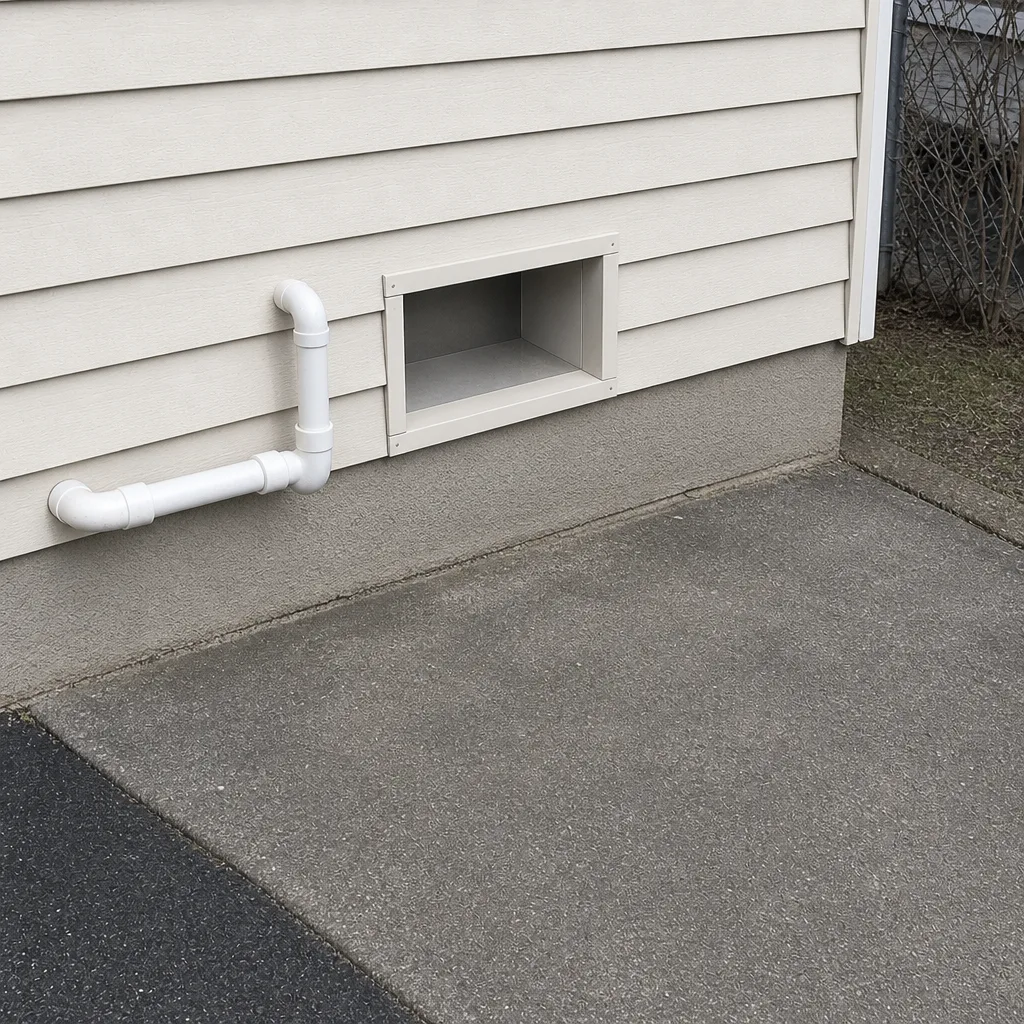 After
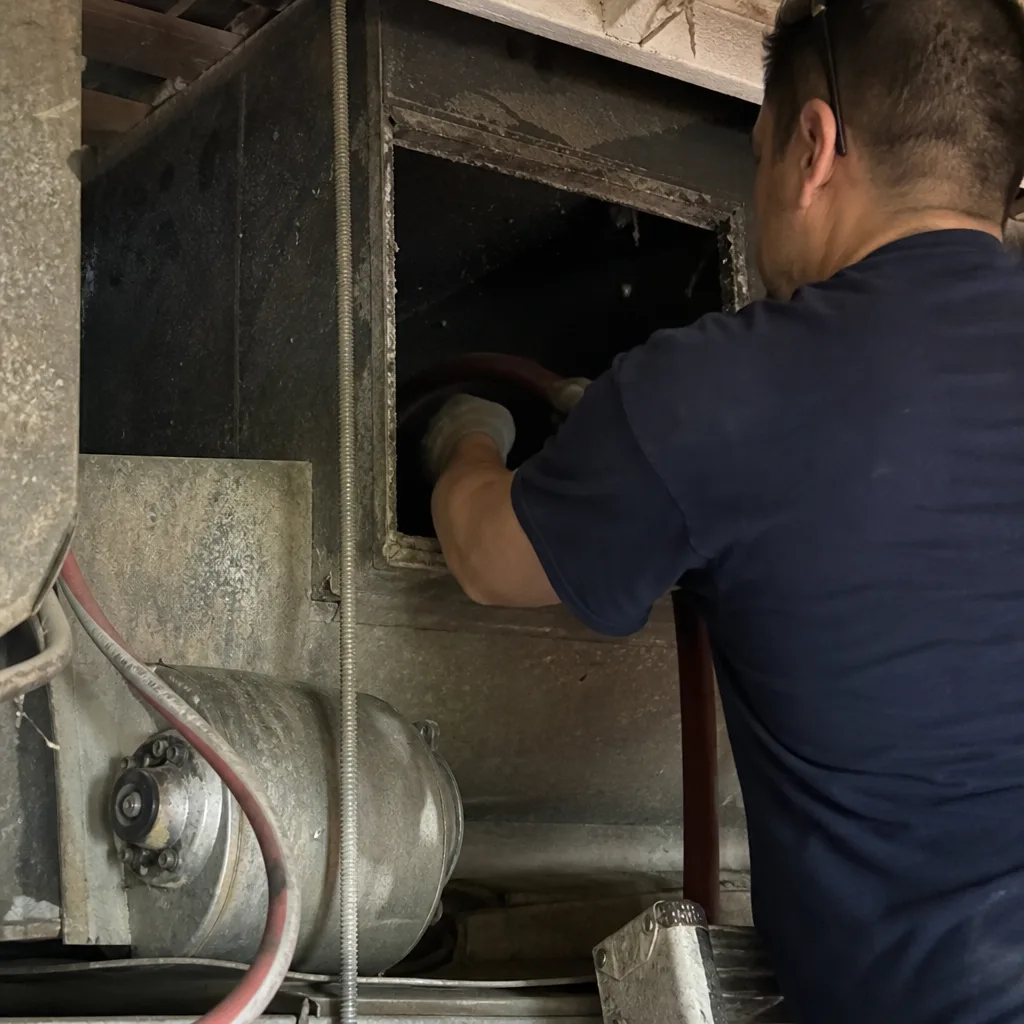 Before
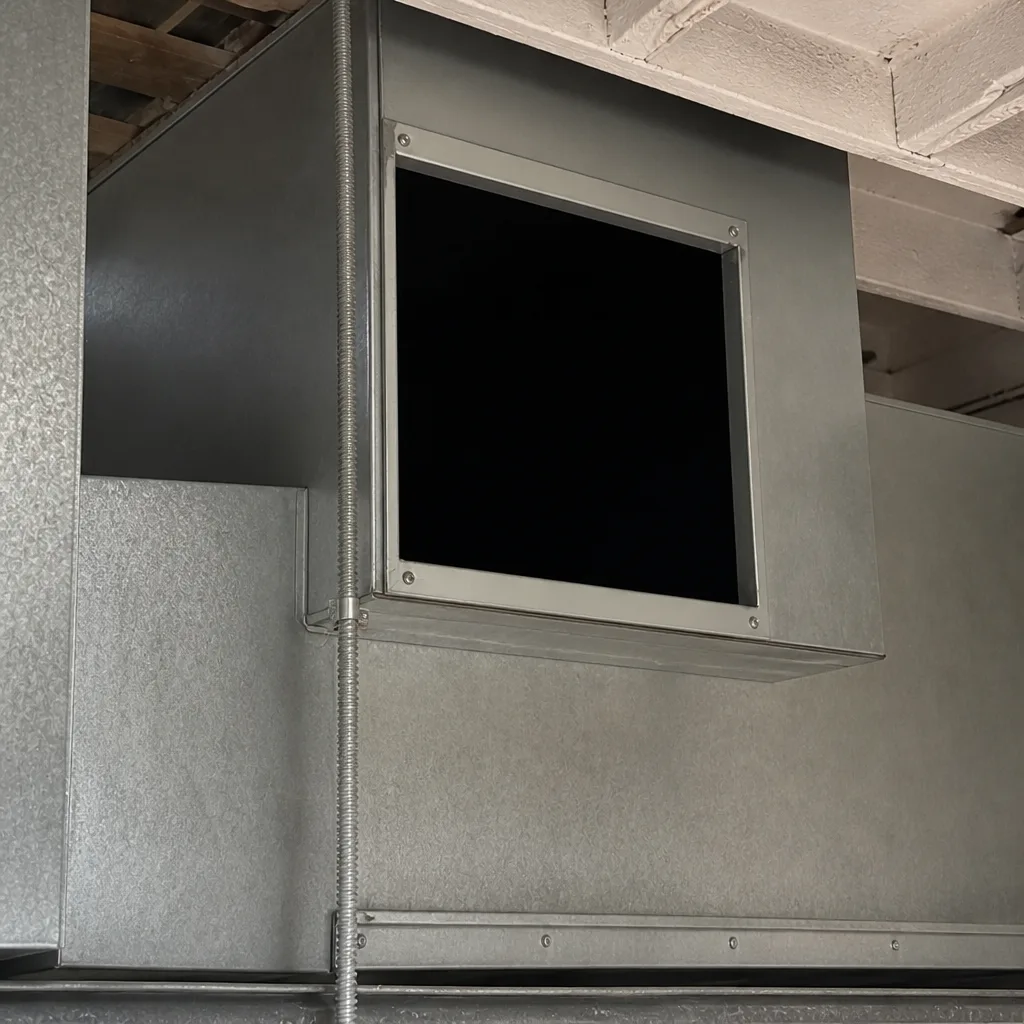 After
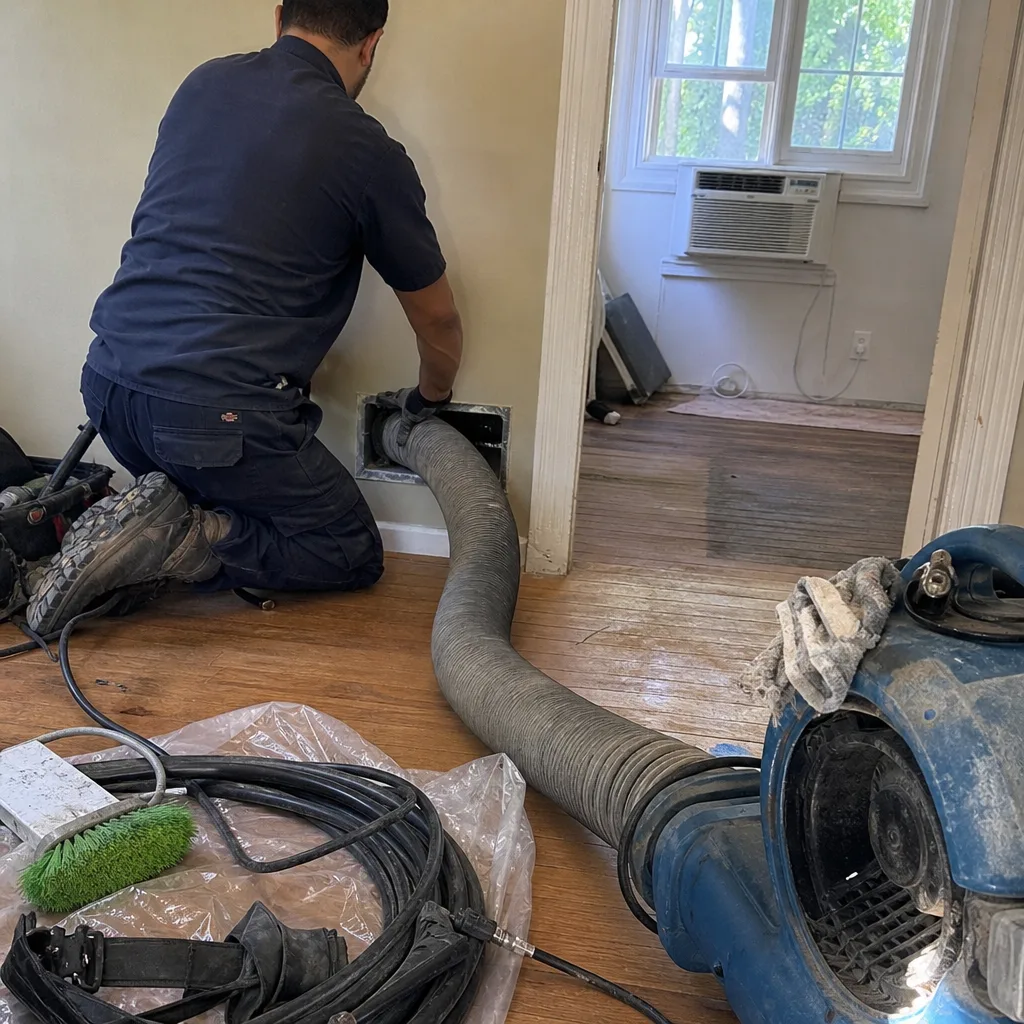 Before
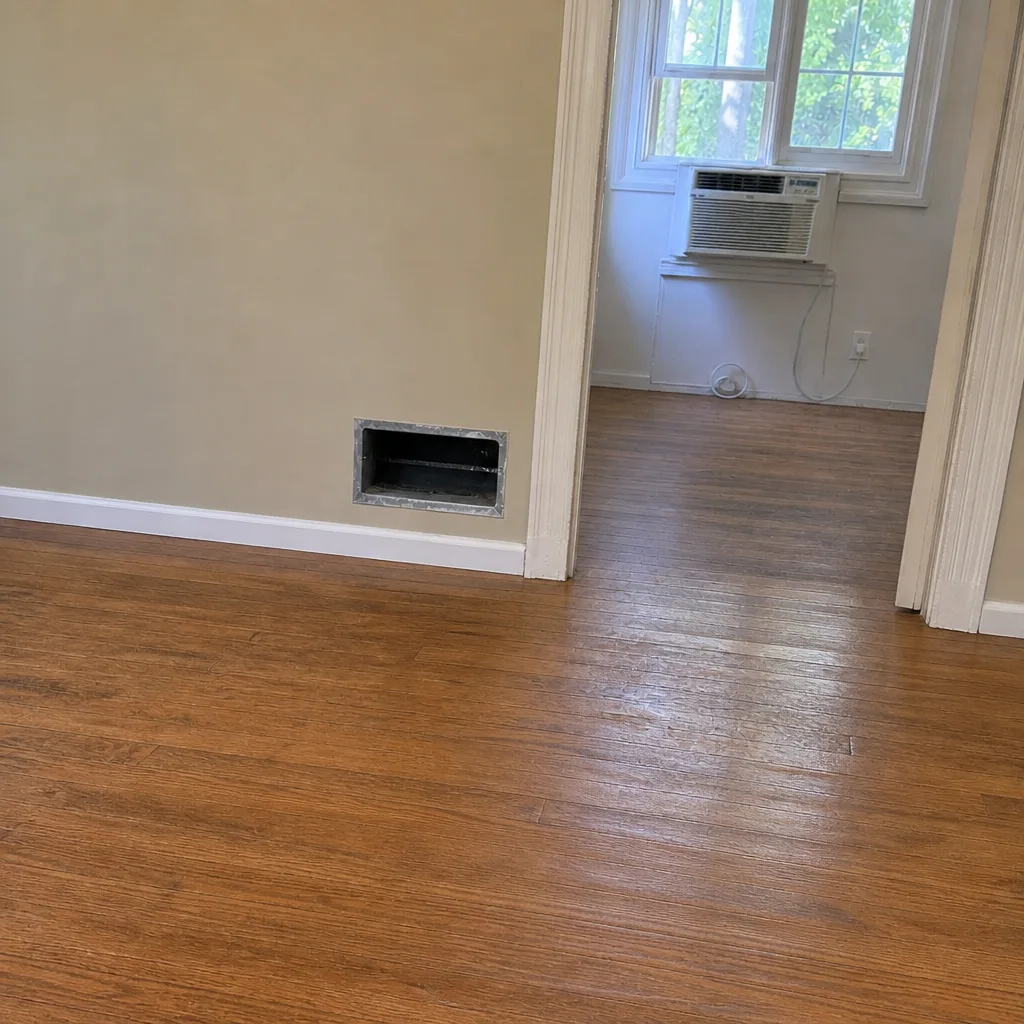 After
Common Mistakes to Avoid
- Treating a dusty vent cover as a duct alarm. Surface dust on a register tells you about room dust, not duct condition. Wipe it down and watch whether debris comes back, or whether the register actually blows particles at you. That’s the real diagnostic.
- Buying a cleaning without an inspection first. A quote given over the phone, before anyone has looked at the return path, the coil condition, or the register airflow, is a guess. Any honest provider in Washington Heights will want to inspect before quoting the job.
- Cleaning the ducts without sealing leaky joints. Air that leaks out of the system is air you paid to condition and didn’t deliver to the room. Cleaning a leaky system without sealing it lets debris re-enter through the same gaps within a season.
- Assuming the musty smell is dirt. Musty means moisture. If there’s a moisture source in the system and it isn’t fixed, cleaning is temporary. Ask about the coil, the drain pan, and any staining near returns before you schedule.
- Upsizing filter rating without checking the system. Installing a high-MERV filter in a system that wasn’t designed for the pressure drop can reduce airflow and make temperature imbalance worse. Use the rating your system supports.
- Forgetting the dryer vent in a dedicated check. In units with an in-apartment dryer, dryer vent lint is a fire hazard independent of duct cleanliness. If lint is backing up in the trap or on the exterior, that’s a dryer-vent issue, not an air-duct issue, and needs its own service.
- Hiring on price alone. The cheapest quote in Washington Heights is often a shop-vac job with no containment, no filtration, and no before-and-after documentation. Ask what equipment they use before they arrive.
Frequently Asked Questions
Most Washington Heights apartments don’t need duct cleaning on a fixed schedule. The honest answer is that cleaning is warranted when a diagnostic pattern shows up – moisture source, return-path contamination, post-renovation debris, or confirmed airflow problems – not on a calendar. A well-maintained system with a clean return path and a proper filter can go many years without cleaning. When a smell, a symptom pattern, or a temperature problem points to the system, that’s the trigger.
The cheap quote usually reflects the equipment, not a bargain. A shop-vac and a shop-vac with an operator isn’t the same as a Rotobrush or Nikro setup with Abatement Technologies containment-grade filtration – and the containment is what keeps fine debris from being redistributed into the air you’re breathing. Ask any provider what equipment they use before you accept a quote. Call (877) 792-7271 for a free estimate – estimates are free.
Before-and-after photos of your own system are the baseline. A proper job should include documentation of what the system surfaces looked like before cleaning and what they look like after. If a provider can’t show you that, you can’t verify anything. Request photos of your return grilles and the inside of a supply boot specifically. Call (877) 792-7271 to ask how our before-and-after documentation works – estimates are free.
It can, when the symptoms are driven by recirculated dust and debris the system is moving. It usually can’t fully resolve symptoms on its own, because winter air dryness and closed-window concentration are part of the picture. A clean system with proper filtration and a sealed return path is the part a professional can actually deliver. Beyond that, consider humidity and a properly rated filter. Call (877) 792-7271 for a free estimate so you can talk it through – estimates are free.
In a pre-war Washington Heights building with a shared return path, yes – renovation dust can migrate into your return through gaps in the chase. If you notice grit, plaster dust, or white powder loading your filter within weeks of a neighboring renovation, that’s worth an inspection. Once the work finishes, a cleaning removes the debris; duct sealing may also be needed to close the gaps that let it in.
It changes both what gets removed and what gets contained. Purpose-built rotary systems like Rotobrush work through the interior surface of the duct rather than just pulling air from the register end; containment-grade filtration from Abatement Technologies captures the fine particles that would otherwise end up back in your room. The result is a job you can verify from the photos, not just from what the technician tells you. Call (877) 792-7271 for a free estimate – estimates are free.
The Bottom Line
The warning signs worth acting on in a Washington Heights apartment are the ones that point to a specific condition inside the system: musty odor that indicates moisture, uneven temperatures that trace to blockage or leakage, winter symptom spikes that suggest recirculated contamination, and filter loading that has changed in type or pace. Dust on a vent cover almost never belongs on that list. Read your filter as diagnostic data, check your returns with a flashlight, note the room-by-room temperature pattern, and treat renovation debris and moisture as the two conditions that change the urgency. When two or more signs line up, an inspection done with proper equipment – Rotobrush, Nikro, Abatement Technologies filtration – will tell you what’s actually going on and whether cleaning is the right fix. For a free estimate in Washington Heights, call (877) 792-7271. We answer 24/7. Fast dispatch from 7am to 7pm, Sunday through Friday.
Written by the team at Air Duct Cleaning Washington Heights.